My research is in the history of philosophy, focusing on Spinoza and on the early Cartesian (proto)feminist François Poulain de la Barre (1648–1723). Generally, I am interested in the intersection of a philosopher’s social views and their metaphysical and epistemological views. Below are short descriptions of some papers I have published or am working on, and a short description of my dissertation. Click on each title to expand.
Paper: “Keeping Them With You: Spinoza, Love, and Eternal Minds”
I have a paper in the Journal of Modern Philosophy on Spinoza’s accounts of the mind eternality, love, and knowledge. You can find it here. The thesis is that Spinoza’s system lets us to keep a loved one “with us,” so to speak, after their death. This is done by increasing knowledge of the loved one’s eternal “something” (as Spinoza calls it) during their life, and then reflecting on this knowledge once they have passed. I further argue that doing this is a Spinozistic good, wherein our joy is preserved or strengthened.
Paper: “External Conditions, Internal Rationality: Spinoza on the Rationality of Suicide“
I have a paper in the Journal of Spinoza Studies on Spinoza’s philosophy of suicide, and how it can encourage better practices in contemporary suicide research. You can find it here. This paper resolves remaining tensions in Spinoza’s views of suicide, suggesting that he thinks that, in some cases, suicides can be rational, before briefly applying Spinoza’s views to questions about contemporary suicide research.
Paper: “Contiguity and the Non-Human in Spinozist Social Bodies”
In this paper, I defend the view that Spinoza thinks that groups of humans can form group individuals in the same way that particular humans are individuals. Contra most scholars, I argue that Spinoza thinks that groups of humans, like nation states or communities, have to be literally physically contiguous and will include non-human bodies as parts. This paper is currently under review.
Paper: “Spinoza, Degrees of Adequacy of Ideas, and Mental Power”
In this paper, I solve a longstanding debate in the literature as to whether Spinozist knowledge can come in degrees. In part, I do this by solving what I call the Mental Power Puzzle: what knowledge do authoritative groups have that gives them power over the minds of others? For Spinoza, I argue, it is knowledge of the religious superstitions common to both these authorities and the general populace. But, being based on superstition itself, this knowledge can only be of a degreed sort. Thus, the focusing on authoritative social groups reveals that Spinoza allows for knowledge to come in degrees, solving a longstanding debate. This paper is currently under journal review.
Paper: “Spinoza’s Speciesism and the Common Notions”
In this paper, I discuss Spinoza’s view that we have perfect knowledge of properties that are common between us and other things we encounter, via our “common notions” of them. Some scholars think the common notions only extend to commonalities that all things share, whereas other scholars think Spinoza allows common notions of properties common between humans and only a subset of other things. I vindicate the latter reading on the basis of Spinoza’s objectionable speciesism, which he only accepts because he thinks humans have genuine commonalities with each other that animals don’t enjoy, and that this is knowable by reason. Spinoza’s speciesism thus reveals the scope of the common notions. This paper is currently in-preparation.
Paper: Poulain’s Cartesian Conceptualism and Anti-Essentialism about Sex
I am writing a paper on François Poulain de la Barre’s conceptualist view of universals and how he applies it to questions of differentiation of extended bodies into universal sex categories. A version of this paper won the British Society for the History of Philosophy Graduate Essay Prize and is currently in-preparation.
Dissertation: Spinoza’s Ethics Upside-Down
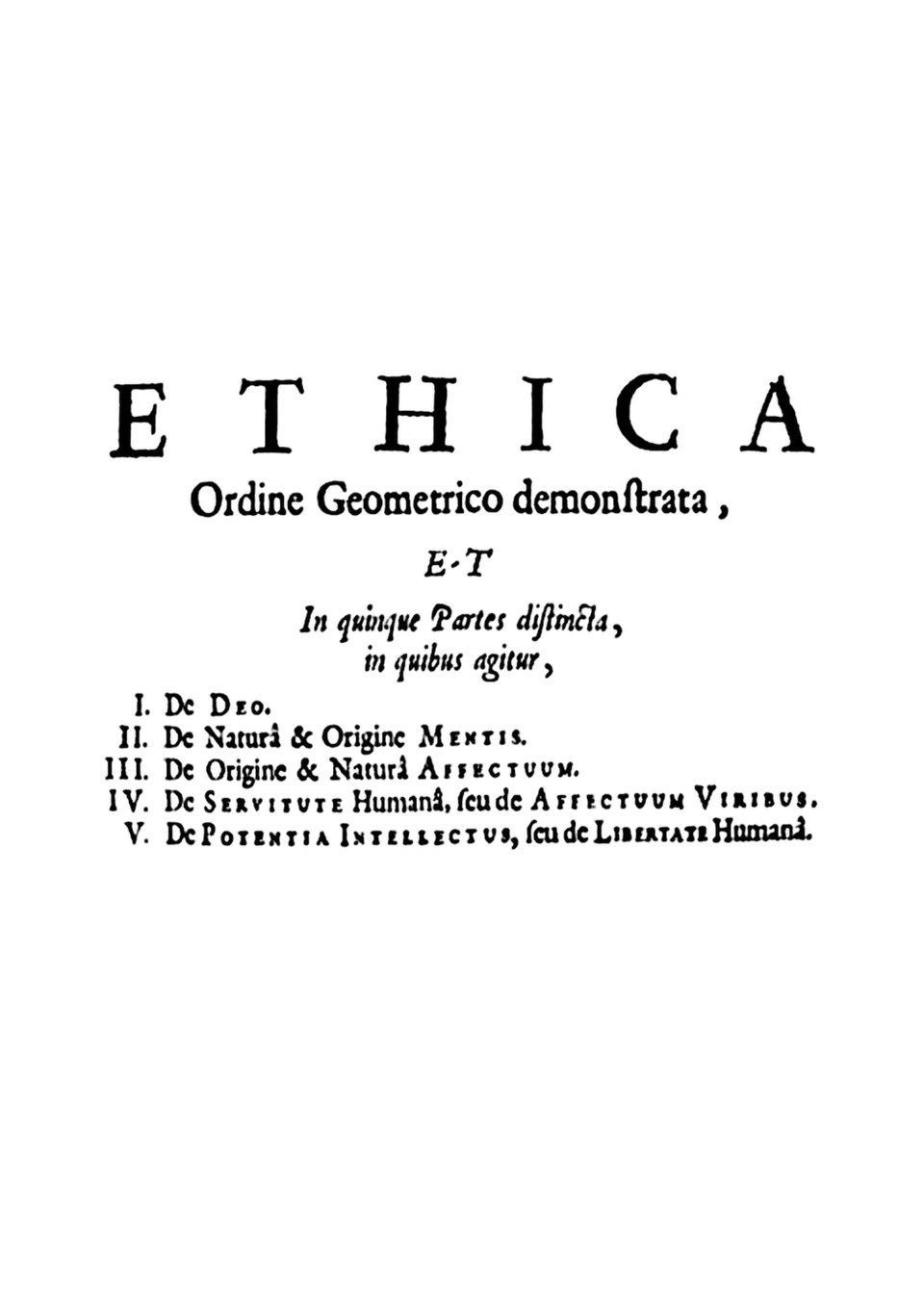
In my dissertation, I take a new approach to Spinoza’s Ethics. The Ethics starts in Books 1 and 2 with fundamental metaphysics and epistemology. Then, in Books 3-5, Spinoza uses those foundations to explain human psychology, moral and ethical philosophy, and social and political life. In my work, I solve persistent issues in the foundational Books 1-2 by considering the more social views developed in Books 3-5. When a later social position is only tenable on certain readings of the earlier metaphysics and epistemology, then we have good reason to accept those readings of the early portions. To understand the Ethics, I turn the Ethics on its head.
Some of my Spinoza papers come from this dissertation and its approach.

 Ian MacLean-Evans